A golf swing, a baseball throw, a tennis forehand, and a kettlebell snatch all depend on the same thing: your trunk turning smoothly. When that rotation feels stuck, most athletes blame the low back or the shoulder. We often find the limit sits in the tissue wrapped around the ribs, mid-back, and flank instead.
Why Trunk Rotation Gets Stuck
Rotational sports ask the same muscles to load and unload thousands of times a season. The obliques, the lats, the muscles between the ribs, and the layers of fascia that tie them together all take part in every swing. When you repeat the same motion again and again, that tissue can thicken and cling to its neighbors. It stops sliding the way it should.
You usually notice it in small ways first. Your backswing feels shorter. You cannot turn as far to one side. Your hips and shoulders compensate to make up the difference, and the low back or the lead shoulder starts to complain. Stretching can feel good for a few minutes, but it does not always change how those layers glide against each other.
How Cupping With Motion Fits In
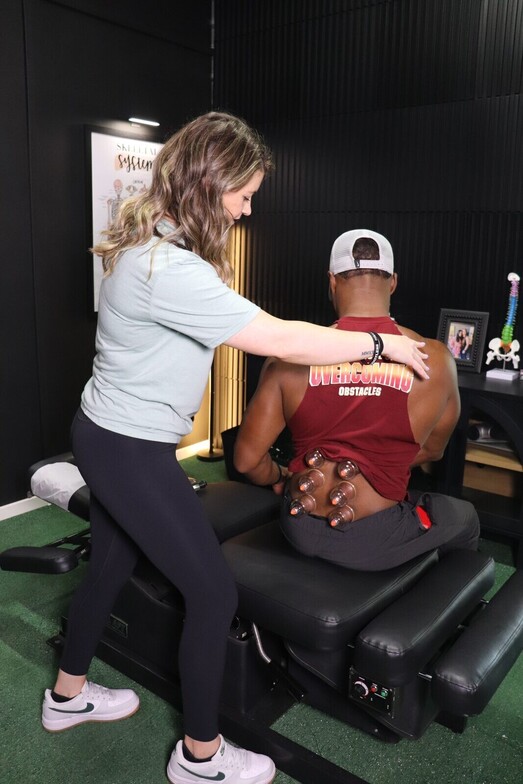
Cupping uses gentle suction to lift the tissue instead of pressing down on it. That lift creates space between layers and encourages blood flow to an area that works hard. At Limitless Sports Chiropractic, we add motion to the process. While the cups sit on your trunk, you move through rotation, side bends, and reaches. The cups keep tissue lifted while you move, so the layers practice sliding in the exact pattern your sport demands.
Cupping is not a standalone service in our office. We include it as part of follow-up chiropractic and soft tissue visits, usually for about 5 to 10 minutes. Many patients notice their turn feels looser afterward, and the cups often leave temporary circular marks that fade over a few days. Those marks are normal and do not mean injury.
What We Look At First
Before we place a single cup, we check how your whole chain moves. We test hip rotation, thoracic spine mobility, rib motion, and shoulder range, because a stiff mid-back or tight hips can make the trunk work harder than it should. Cupping works best when it supports the rest of the plan, which can include chiropractic adjustments for joint motion, myofascial release for specific restrictions, and drills you can do on your own.
Who Tends to Benefit
We see this pattern in golfers, baseball and softball players, tennis and pickleball players, CrossFit athletes, and anyone who throws, swings, or twists for a living or for fun. If you live in Aubrey or Cross Roads and fit into your tee time or practice around work and family, a short add-on during a follow-up visit can make your time on the course or the field feel more productive.
What You Can Do Between Visits
- Warm up your trunk with open-book rotations and cat-cow before you play, not just your arms and legs.
- Practice breathing into the sides and back of your ribs to keep rib motion available.
- Rotate through your hips during your swing or throw so your low back does not take the entire load.
- Pay attention to which side feels tighter and tell us at your next visit.
Ready to Turn Better?
If your rotation feels tight or one-sided, we would like to take a look. Dr. Taylor Hartman and our team see athletes and active adults from Oak Point, Little Elm, Aubrey, Cross Roads, Denton, and Prosper, and we build each plan around what your sport asks of your body. Book your visit online and we will help you get your turn back.

Taylor Hartman
Contact Me