If you've got tennis elbow or golfer's elbow, you've probably already tried the standard advice: rest it, ice it, maybe wrap a brace around your forearm and hope for the best. And you've probably noticed that none of it actually fixes the problem: the ache just comes right back the first time you pick up a racquet, swing a golf club, or even shake someone's hand too firmly.
That's because tennis elbow (lateral epicondylitis) and golfer's elbow (medial epicondylitis) aren't really “inflammation” problems by the time most people walk into our office. They're tendon problems. Repetitive strain on the tendons that attach to the outside or inside of the elbow causes small-scale tissue damage, and when that tissue heals, it doesn't always heal cleanly. You end up with disorganized scar tissue and adhesions binding the tendon fibers together instead of letting them glide the way they're supposed to. Rest can calm the irritation down temporarily, but it doesn't clear out that tangled tissue, which is exactly why the pain returns as soon as you load the arm again.
This is where Graston Technique comes in, and it's one of the tools we use most often for elbow pain at our Oak Point clinic.
What Graston Technique Actually Does
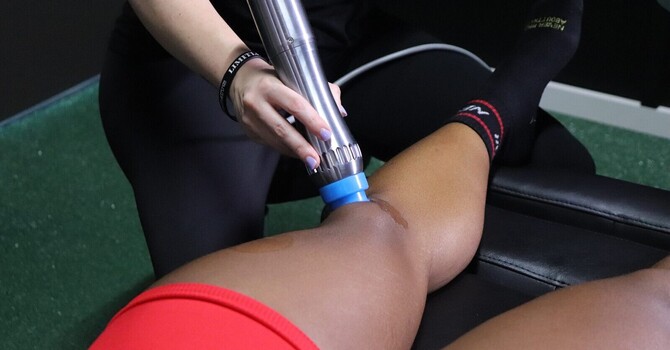
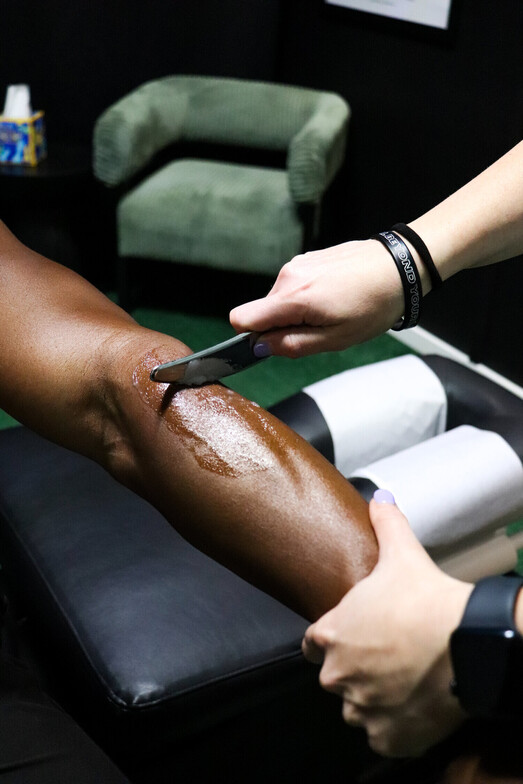
Graston is a form of instrument-assisted soft tissue mobilization, or IASTM. We use specially contoured stainless steel instruments to systematically work across the affected tendon and surrounding muscle. The edges of the instrument let us (and you) feel exactly where the tissue is restricted, thickened, or fibrotic in a way that fingers alone often miss.
The mechanism is pretty straightforward once you understand it. The controlled micro-trauma from the instrument stimulates a localized inflammatory response, which sounds counterintuitive but is actually the point: it kickstarts your body's natural healing cascade in tissue that's gotten “stuck” in a chronic, under-healed state. Increased blood flow to the area brings in the fibroblasts and growth factors needed to lay down new, properly aligned collagen. Over a series of sessions, your body remodels that disorganized scar tissue into tissue that can actually stretch, glide, and absorb load the way healthy tendon should.
Patients usually describe the sensation as an intense, scraping pressure: not painful in the sharp sense, but noticeably different from a massage. Most people tolerate it well, and many report the elbow already feels looser by the end of the first session.
Why This Matters More Than Just “Working Out the Knot”
Tennis and golfer's elbow are frustrating precisely because they're overuse injuries hiding as acute ones. The swing, the serve, the repetitive gripping at a job site or a keyboard: the mechanism keeps recurring even after you feel better, which is why so many people cycle through months of on-and-off pain without ever fully resolving it. Graston addresses the actual tissue quality, not just the symptom of the day. Paired with corrective exercise and a look at the mechanics that caused the overload in the first place (grip size, swing form, workstation setup) it gives you a real shot at resolving the problem instead of just managing it.
We typically combine Graston with joint mobilization of the elbow and wrist, since restricted joint mechanics upstream or downstream of the tendon often contribute to why the tissue got overloaded to begin with. That combination is a big part of what sets sports chiropractic care apart from a generic “rest and ice” approach.
Who This Is For
If you're dealing with pain on the outside of your elbow that flares with gripping, lifting, or backhand strokes, or pain on the inside of your elbow that flares with throwing, golfing, or repetitive forearm rotation, Graston Technique is worth discussing at your next visit. It's especially useful for cases that have already dragged on for months, since that's exactly the kind of chronic, fibrotic tissue Graston is designed to address.
We see this constantly with weekend tennis and pickleball players, competitive golfers, and even parents who spend their days lifting toddlers and hauling gym bags from one practice to the next across Oak Point and the surrounding area. Athletes from Little Elm and across the area come to us for elbow and forearm injuries every week. Elbow overuse doesn't discriminate by sport. It shows up anywhere repetitive gripping and loading happens throughout North DFW.
Ready to Get Your Elbow Back to Normal?
If tennis elbow or golfer's elbow has been nagging at you for weeks or months with no real progress, it's time for an approach that actually targets the tissue instead of just waiting it out. At Limitless Sports Chiropractic, Graston Technique is one of the tools we use every week to help patients get back to their sport and their daily life without that constant ache in the forearm.
Book an appointment today and let's get a real plan in place for your elbow: no more guessing, no more bracing it and hoping.

Taylor Hartman
Contact Me