If sitting on a hard chair, driving for an hour, or taking your first few strides in a sprint brings a deep ache right under your glute, you may be dealing with proximal hamstring tendinopathy. We see this often in runners, sprinters, soccer players, and lifters who love heavy deadlifts. It feels like a hamstring pull that never finishes healing, because the problem sits in the tendon at the top of the muscle, not in the muscle belly.
What proximal hamstring tendinopathy actually is
Your hamstring muscles attach to the sit bone (the ischial tuberosity) through a thick tendon. When you load that tendon more than it can handle, the fibers lose their organization and the area gets sensitive. Common triggers include a jump in weekly mileage, hill sprints, heavy hinging work like deadlifts and good mornings, and long hours of sitting on top of hard training.
Many athletes describe a deep, localized ache that flares when they sit, stretch the hamstring, or accelerate. Stretching often makes it worse. When you pull on a cranky tendon right where it wraps around the sit bone, you add compression to tissue that already struggles. That is why so many people stretch for months and see little change.
How shockwave therapy fits in
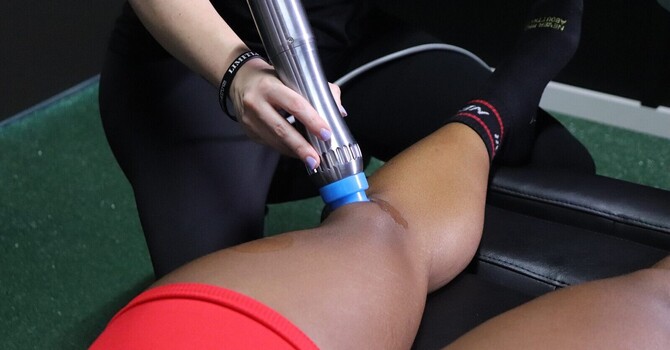
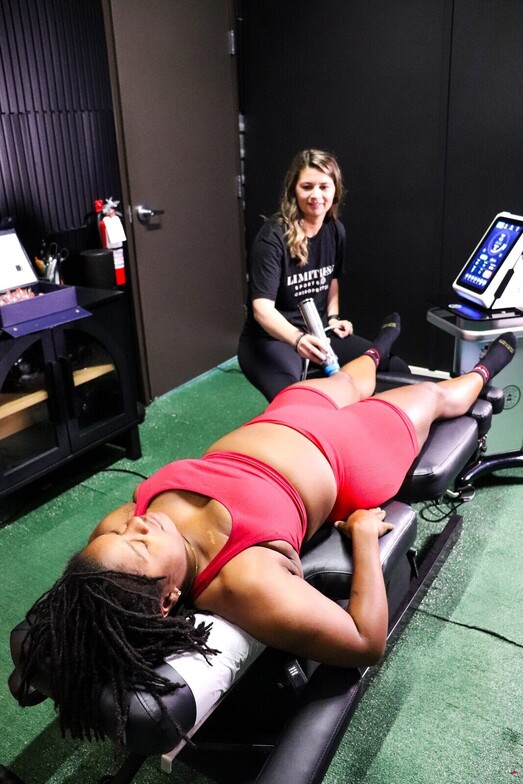
Shockwave therapy sends acoustic pressure waves into the tendon attachment. Research suggests these waves can stimulate blood flow, encourage the cells that rebuild tendon tissue, and calm sensitive nerve endings. Tendons have a limited blood supply, so they heal slowly on their own. Shockwave gives that process a push.
A session takes a few minutes. We apply the handpiece to the sit bone area and the upper hamstring, and you feel a rapid tapping sensation that can feel intense on tender spots. Many patients notice the area feels looser afterward, though every body responds differently, and tendon problems usually need several sessions spaced about a week apart.
Why we pair it with movement and loading
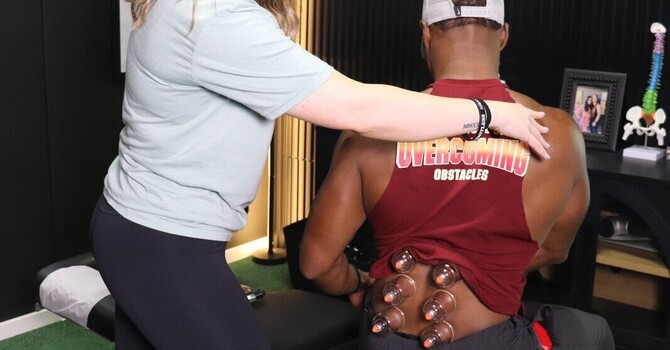
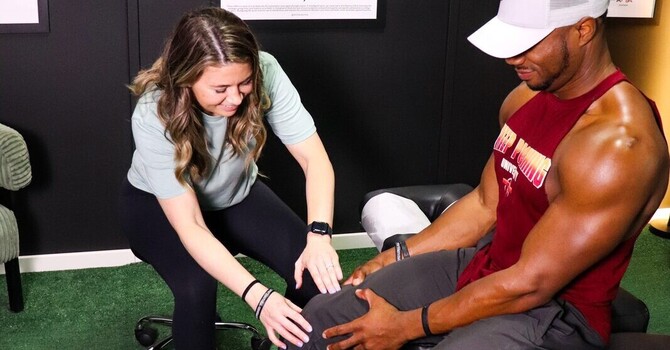
Shockwave works best inside a bigger plan. At Limitless Sports Chiropractic, we look at the whole chain: your hip, your low back, your pelvis, and how you move under load. If your pelvis tips forward when you run, or your glutes do not share the work, your hamstring tendon absorbs extra stress. We combine shockwave with hands-on soft tissue work, joint mobility, and progressive strengthening so the tendon can handle your sport again.
A typical plan includes:
- Shockwave sessions to the tendon attachment, usually about once a week.
- Isometric holds early on, then slow, heavy strength work as your symptoms allow.
- Hip and pelvic mobility work so the hamstring stops taking every hit alone.
- Practical changes to sitting, hill work, and deadlift depth while the tendon calms down.
When to get it checked
Consider an evaluation if your sit bone pain lasts longer than three weeks, if hard seats bother you, or if you keep resting and stretching only to feel the same ache when you pick up speed. A sudden sharp pain with bruising points to a different problem, so we examine you first and refer out when your situation calls for it.
Care close to home
If you live in Little Elm or Oak Point and your training keeps stalling at the sit bone, a focused plan can help you get back to the work you love. Athletes from Aubrey, Cross Roads, Denton, and Prosper make the trip to see us too, and many tell us the plan makes sense because we explain the why behind every step.
Ready to take the next step? Book online at Limitless Sports Chiropractic. Dr. Taylor Hartman and our team will look at your hip, hamstring, and training load, then build a plan around your sport.

Taylor Hartman
Contact Me