If you've been dealing with a hamstring that never quite loosens up — no matter how much you stretch, foam roll, or warm up before a run — you're not imagining it, and you're not doing your stretching wrong. Chronic hamstring tightness is one of the most common complaints I see from runners, soccer and football players, and weekend warriors across Oak Point, Little Elm, and Aubrey, TX, and it's also one of the most misunderstood.
Most people treat a tight hamstring like a flexibility problem. They stretch harder, hold it longer, add more reps. And for a little while, it feels better. Then a day or two later, the tightness is right back. That cycle is usually a sign the problem isn't length — it's adhesion. Somewhere along the muscle, or where the hamstring meets the fascia, small bands of scar tissue or restricted tissue have formed, often from an old strain, repetitive overuse, or simply sitting for long stretches every day. Stretching pulls on the whole muscle, but it can't release a localized adhesion. That's where Active Release Technique, or ART, comes in.
What ART Actually Does
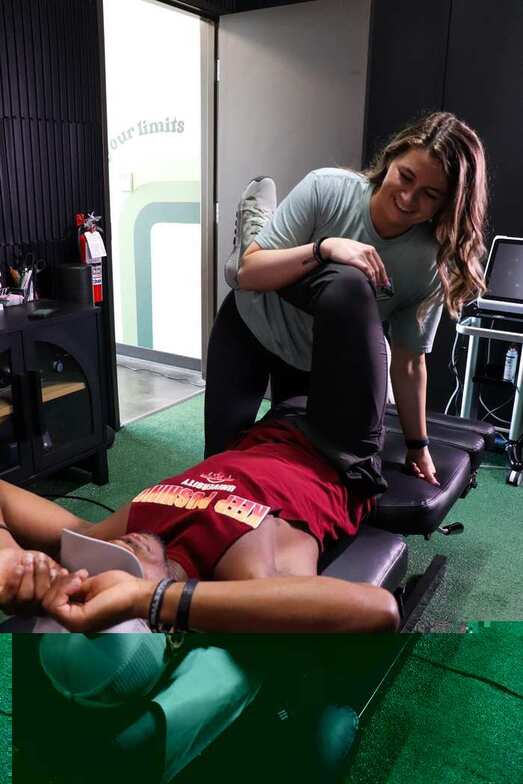
Active Release Technique is a hands-on soft tissue treatment where I apply precise tension to the hamstring muscle while you actively move your leg through a specific range of motion — bending and straightening the knee, for example, while I hold and guide the tissue. That combination of directed pressure plus active movement is what separates ART from a massage or generic stretching. It lets me find the exact spot where the tissue is stuck to the structures around it and break up that adhesion directly, rather than just working the muscle in general.
For hamstrings specifically, this matters because the muscle group is made up of three separate muscles (the biceps femoris, semitendinosus, and semimembranosus) that all have to glide independently against each other and against the surrounding fascia. When one segment gets restricted, you often feel it as generalized "tightness," even though the real problem is a specific, findable spot. ART lets me isolate that spot instead of guessing.
Who This Helps
I see this most often in a few groups of patients:
Runners and athletes training in the North DFW area who've had a prior hamstring strain that never fully resolved. The injury healed enough to get back to activity, but the scar tissue left behind keeps the muscle from moving through its full range, which sets you up for re-injury.
Field and court sport athletes — soccer, football, basketball — who do repeated sprinting and cutting. Hamstrings absorb a lot of eccentric load in these sports (the muscle lengthening under tension while decelerating), and that's exactly the kind of stress that creates adhesions over time.
Desk workers and students who sit for hours and then go straight into a workout or practice. Prolonged hip flexion shortens the muscles around the hip and can leave the hamstrings chronically restricted even without a specific injury.
What to Expect
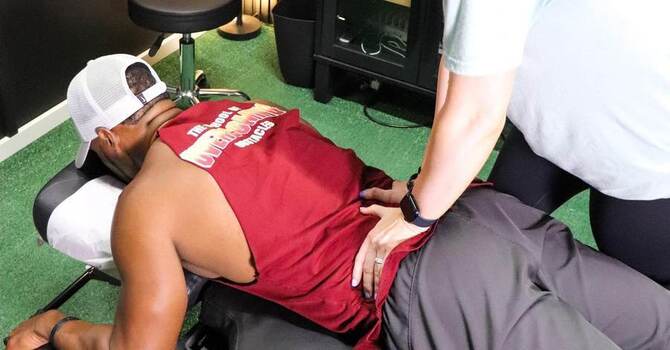
An ART session for the hamstring is quick — usually 5 to 10 minutes of direct work as part of a treatment visit, not a standalone hour-long appointment. I'll locate the restricted area by feel, apply tension at that specific point, and have you actively flex and extend your knee while I hold the tissue. It's not painful in the way an injury is painful, but you will feel a distinct, sometimes uncomfortable pulling sensation right at the spot that's actually stuck — that's usually a good sign we found the right spot. Most patients notice a difference in range of motion the same day, though a full resolution of a longstanding adhesion may take a few sessions, especially if there's a history of a real strain in that area.
I'll often pair ART with a chiropractic adjustment to address any pelvic or lumbar alignment issues that are contributing to the way the hamstring is being loaded in the first place, since a tight hamstring is frequently a symptom of something happening further up the kinetic chain, not just an isolated muscle issue.
When to Get It Checked
If your hamstring tightness has been hanging around for more than a few weeks despite consistent stretching, if you had a strain months or years ago that "healed" but never felt quite the same since, or if you notice the tightness is asymmetrical (one side noticeably worse than the other), that's worth having assessed rather than continuing to stretch around it.
If you're dealing with a hamstring that won't loosen up no matter what you try, come see us. As a sports chiropractor in Oak Point, TX serving athletes throughout Little Elm, Prosper, Aubrey, and the greater North DFW area, I can assess whether what you're feeling is a true flexibility issue or an adhesion that needs direct treatment, and build a plan that gets you back to full speed. Book your visit at Limitless Sports Chiropractic and let's get that hamstring moving the way it's supposed to.

Taylor Hartman
Contact Me