If you're a runner, jumper, or weekend warrior in North DFW and you've got a nagging ache right below your kneecap that flares up on stairs, squats, or during a hard workout, there's a good chance you're dealing with patellar tendinitis — often called "jumper's knee." I see this constantly in the athletes I treat here at Limitless Sports Chiropractic, and one of the most effective tools I reach for is the Graston Technique.
What Patellar Tendinitis Actually Is
The patellar tendon connects your kneecap (patella) to your shinbone, and it takes the brunt of the load every time you jump, sprint, squat, or decelerate. Repetitive stress — think basketball, volleyball, soccer, distance running, or even a sudden jump in training volume — causes small amounts of damage to the tendon faster than your body can repair it. Over time, that damage accumulates into degenerative changes in the tendon tissue, not just simple "inflammation." That distinction matters, because it's exactly why rest alone so often falls short.
Why Rest Alone Doesn't Fix It
A lot of athletes try to tough it out or take a few weeks off, hoping the pain will resolve on its own. Sometimes it dulls down. But when they return to training, the pain comes right back — because the underlying tissue disorganization in the tendon was never actually addressed. Tendons have relatively poor blood supply compared to muscle, so they heal slowly and often heal with disorganized, less resilient collagen fibers unless that healing process is guided. Simply waiting doesn't reorganize that tissue. This is where hands-on treatment comes in.
How Graston Technique Helps
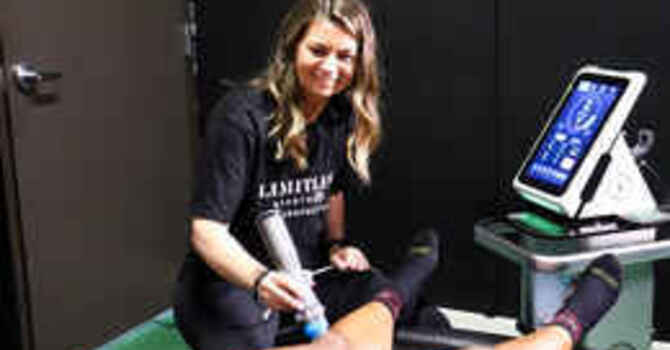
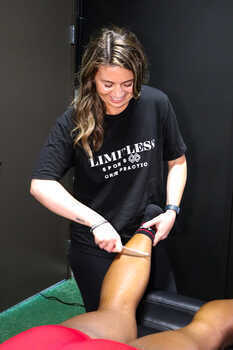
Graston Technique (a form of instrument-assisted soft tissue mobilization, or IASTM) uses specialized stainless steel instruments to detect and treat areas of restriction, scar tissue, and fibrotic buildup in the tendon and surrounding tissue. When I run the instrument along the patellar tendon and quad, it does two important things:
First, it helps break up the disorganized collagen and adhesions that have built up from chronic overuse, which is a major driver of that "gritty" or stuck feeling many athletes describe just below the kneecap. Second, it creates a controlled micro-trauma that signals your body to kick off a fresh, more organized healing response in the tendon — essentially restarting the repair process in a way rest by itself cannot do.
Most patients feel some soreness after a session, similar to a deep tissue massage, but many notice improved mobility and reduced pain within just a few visits. Graston is typically paired with a loading program — controlled, progressive exercises like eccentric squats — because tendons need mechanical stress to remodel properly. The combination of Graston to address the tissue quality and targeted loading to rebuild tendon strength is what actually gets athletes back to jumping and cutting pain-free, rather than just masking symptoms.
Who This Helps Most
Jumper's knee shows up most often in basketball and volleyball players, distance runners, soccer players, and anyone who's recently ramped up squat or plyometric training. If you've had that dull, achy pain below the kneecap for more than a couple of weeks — especially if it's worse going down stairs or after sitting for a while — it's worth getting it evaluated rather than hoping it fades away. Left untreated, patellar tendinitis can progress and become significantly harder to resolve.
When to See Someone
If you're dealing with knee pain that isn't improving with basic rest and stretching, don't wait until it sidelines you completely. As a sports chiropractor in Oak Point, TX, I work with athletes throughout North DFW — including Little Elm, Prosper, and Aubrey — to identify exactly what's driving the pain and build a treatment plan that combines Graston Technique, targeted loading, and chiropractic care to get you back to full training, not just pain-free at rest.
If jumper's knee has been slowing you down, come see us at Limitless Sports Chiropractic. Book an appointment today and let's get that tendon working the way it's supposed to.

Taylor Hartman
Contact Me