Your Muscles Work Hard. Cupping Helps Them Bounce Back.
If you play a sport, train at the gym, or just stay active, you know what it feels like when your body needs more time to recover than you have. Sore legs after a long run. Tight shoulders after a heavy lift. A back that just won't loosen up no matter how much you stretch. Athletes in Aubrey, Oak Point, Little Elm, and Prosper are using cupping therapy to speed that process up, and the results are hard to argue with.
At Limitless Sports Chiropractic, cupping is one of our most popular treatments for active adults. Here is what it actually does and why it works.
What Cupping Does to Your Tissue
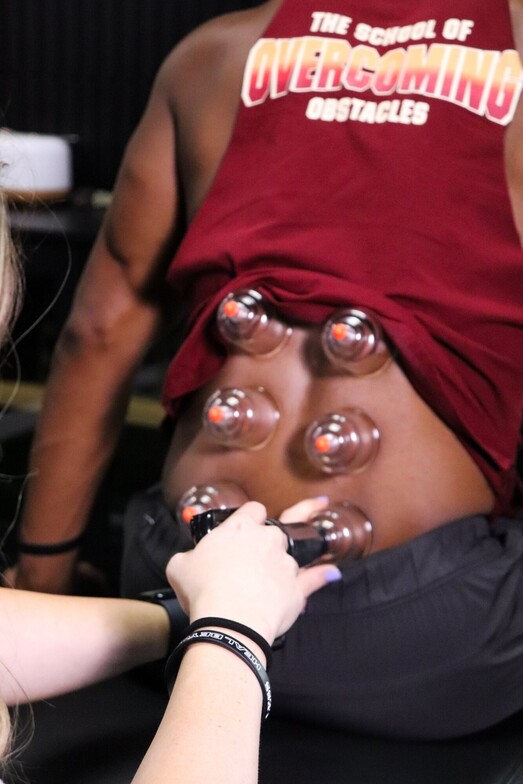
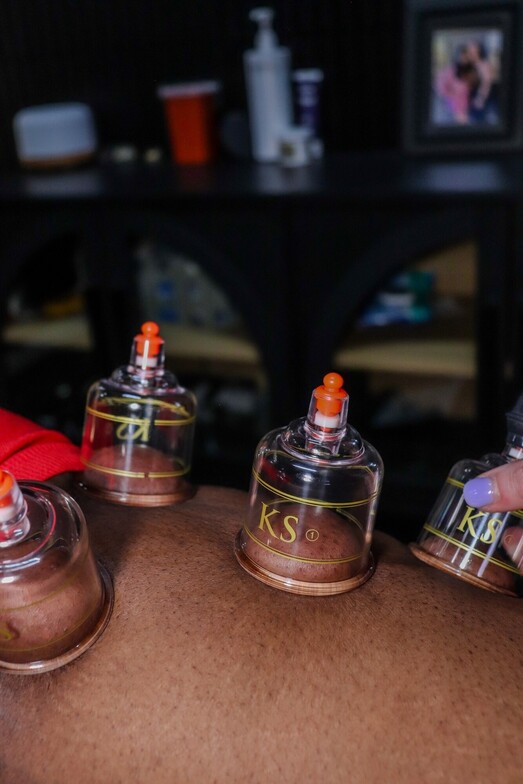
Cupping uses silicone or plastic cups that create suction on your skin and the tissue just underneath. Instead of pressing down like a massage does, cupping lifts. That lifting action pulls blood and fluid into the area, opens up the layers of tissue that tend to get stuck together, and gives your body the resources it needs to repair faster.
For athletes, the big benefits look like this:
Reduced muscle soreness. The technical term is delayed onset muscle soreness, or DOMS. That stiffness you feel 24 to 48 hours after a tough workout. Cupping increases blood flow to the area, which clears out the waste products that cause that soreness and speeds up the repair process.
Better range of motion. Tight tissue restricts how far you can move. Cupping loosens the fascia, which is the connective tissue that wraps around your muscles, so you get more movement back faster. Athletes often notice this immediately after a session.
Faster recovery between sessions. If you are training multiple days in a row or playing back-to-back games, cupping can help you feel ready sooner. It is not magic, but it does give your body a meaningful boost.
Reduced tension in problem areas. Most athletes have a spot or two that always gets tight. Hip flexors, upper traps, calves, IT band. Cupping targets those areas directly and helps break the cycle of tension that keeps coming back.
What About the Marks?
Yes, cupping leaves circular marks. They are not bruises even though they look like them. A bruise happens when tissue is damaged. The marks from cupping are from blood being pulled to the surface of the skin. They are painless, they fade in a few days to a week, and they are actually a sign that the treatment is doing its job.
The darker the mark, the more stagnation there was in that area. Athletes with very tight or overworked spots often see darker circles, especially in the first few sessions. As you keep up with treatment, the marks get lighter because the tissue is in better shape.
Who Gets the Most Out of Cupping
Cupping works well for almost any active person, but it is especially effective if you are a runner dealing with tight calves or hip flexors, a CrossFitter or weightlifter with upper back and shoulder tightness, a softball or baseball player with arm and shoulder soreness, someone who sits at a desk all day and trains hard in the evening, or anyone who feels like their muscles never fully recover between sessions.
At Limitless Sports Chiropractic, we do not just throw cups on and walk away. We combine cupping with movement, other soft tissue techniques, and a plan built around your specific sport and schedule.
Ready to Feel the Difference?
If you are in Aubrey, Oak Point, Little Elm, or Prosper and your body is not recovering the way it should, cupping might be exactly what you need. Book a session at Limitless Sports Chiropractic and let us take a look at what is going on and build a plan that fits your training.
Visit limitlesssportschiropractic.com to schedule.
FAQ: Cupping Therapy for Athletes
Q: Does cupping hurt?
A: Most people describe it as a tight pulling sensation rather than pain. Some areas are more sensitive than others, but cupping is generally well tolerated. Any discomfort during the session usually fades quickly.
Q: How soon will I notice a difference?
A: Many athletes notice improved range of motion and reduced soreness within 24 hours of their first session. Results build with consistent treatment.
Q: How often should I get cupping?
A: It depends on your training schedule and goals. For active recovery, once every one to two weeks works well for most athletes. We will give you a specific recommendation based on what you have going on.
Q: Can I train after a cupping session?
A: Light activity is fine. We usually recommend skipping heavy training for the rest of the day after cupping to let your body process the treatment, but you can get back to full training the next day.
Q: Is cupping the same as massage?
A: No. Massage uses pressure to compress tissue. Cupping uses suction to lift it. They work in different ways and often complement each other well. We can combine both depending on what your body needs.

Taylor Hartman
Contact Me