If you get headaches that start at the base of your skull, wrap around one side, and seem to get worse the longer you sit at a desk or stare at your phone, there's a good chance the problem isn't actually in your head. It's in your upper traps and the muscles at the base of your neck. I see this constantly in my Oak Point office, especially with athletes who spend hours in a car seat between practices or patients who work desk jobs and then go straight to the gym without ever addressing the tightness building up between their shoulder blades.
This pattern has a name: cervicogenic tension headache, or a headache referred from trigger points in the neck and upper back. And it's one of the best-responding conditions I treat with dry needling.
Why Your Upper Traps Cause Headaches
The upper trapezius, suboccipital muscles, and levator scapulae all attach at or near the base of the skull. When those muscles are chronically tight or holding an active trigger point — a small, hyperirritable knot of muscle fiber that won't release on its own — they refer pain up into the head. Classic referral patterns from the upper traps run up the side of the neck, behind the ear, and into the temple. Trigger points in the suboccipitals refer pain straight up the back of the skull, sometimes behind the eyes.
This is why stretching alone often doesn't fix a tension headache. You can stretch a muscle all day, but a true trigger point is a localized dysfunction in the muscle tissue itself — a spot where the fibers are stuck in a contracted state and not getting enough blood flow. Stretching pulls on the whole muscle. It doesn't reliably release that one spot.
What Dry Needling Actually Does
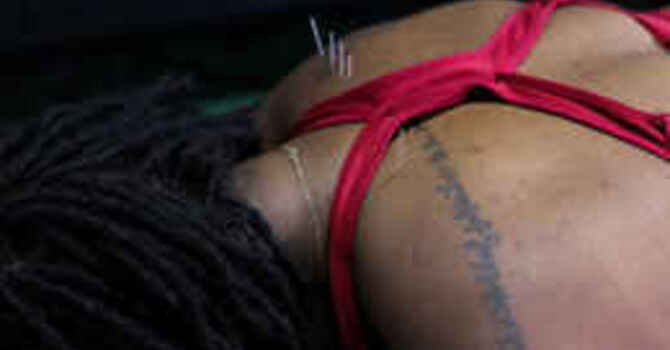
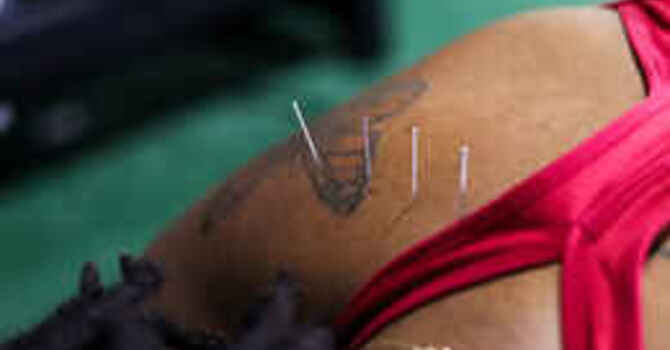
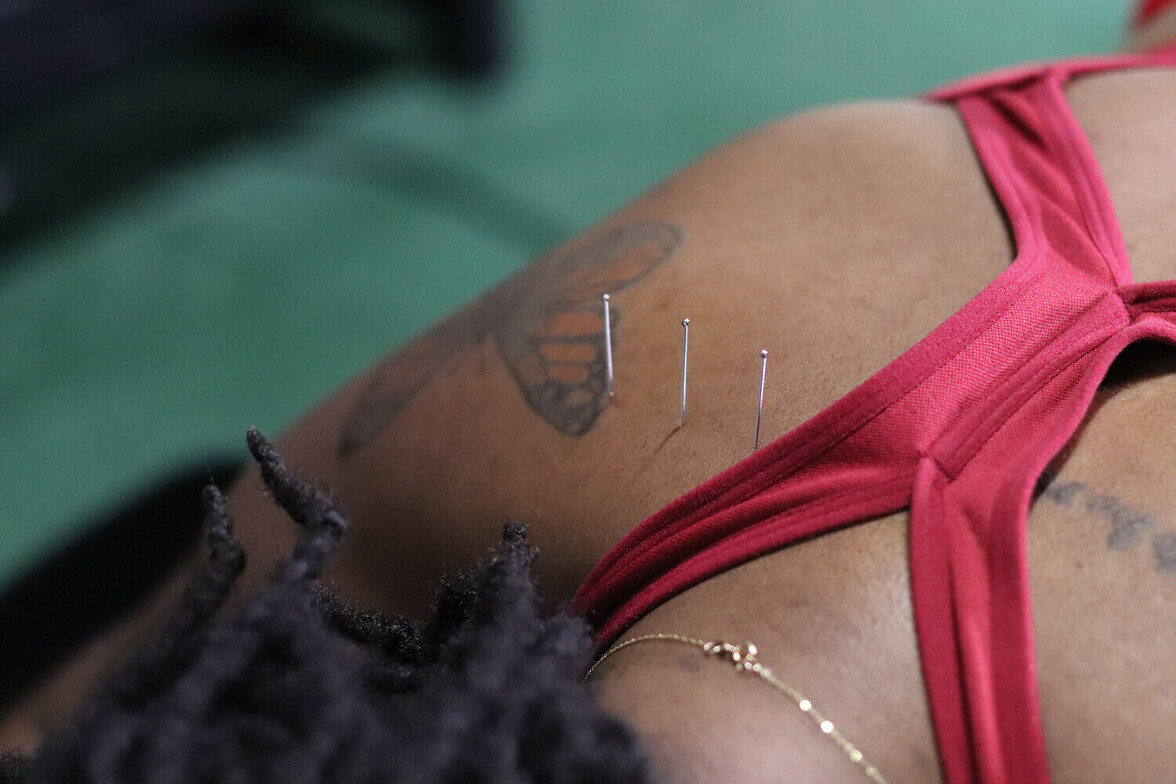
Dry needling uses a thin, solid filament needle inserted directly into the trigger point. Unlike a stretch or a massage, the needle can reach the exact knot causing the referral pattern, even when it's deep under the shoulder muscle where hands can't effectively get to it. Once the needle contacts the trigger point, it's common to feel a brief muscle twitch — that's the sign the dysfunctional muscle fiber is releasing. Patients often feel the tightness in their neck and shoulders let go within minutes, and headache frequency and intensity typically drop over a series of sessions as the underlying muscle tension resolves rather than just being masked.
This is different from how I use dry needling for something like sciatica, where the target is nerve-related leg pain. For headaches, we're going straight after the muscular trigger points that are referring pain into the skull — a completely different mechanism, but the same precise, needle-based approach.
Who This Helps Most
I see this work particularly well for:
Athletes in contact or throwing sports who build up chronic upper trap tension from repetitive shoulder loading. Desk workers and students who spend hours in forward head posture, which overloads the upper traps and suboccipitals just to hold the head up. Anyone who's tried massage or stretching for their headaches and gotten short-term relief that never lasts.
If your headaches consistently start at the back of your neck or skull rather than behind your eyes or across your sinuses, that's a strong sign the driver is muscular, not vascular or sinus-related — and that's exactly the kind of headache dry needling is built to address.
What to Expect
A dry needling session for headache-related trigger points is quick, usually built into a regular treatment visit alongside chiropractic adjustment or soft tissue work if needed. Most patients feel some soreness in the treated muscle for a day, similar to a deep workout, before the tension relief sets in. It's not uncommon to notice fewer headaches after just two or three sessions, though chronic cases built up over months or years of poor posture and repetitive strain usually need a full treatment plan to fully resolve.
Getting Started
If you're dealing with recurring headaches that start in your neck and shoulders, don't just keep reaching for ibuprofen. We can find out whether the real problem is sitting in your upper traps. At Limitless Sports Chiropractic, we treat athletes and active adults throughout Oak Point, Aubrey, Little Elm, Prosper, and the rest of North DFW, combining dry needling with chiropractic care and soft tissue therapy to get to the actual source of the pain, not just the symptom.
If you're searching for a chiropractor in Aubrey, TX who treats headaches as a movement and muscle problem instead of just prescribing rest, reach out and schedule an evaluation. We'll assess your neck and shoulder mechanics, identify the trigger points that are actually driving your symptoms, and build a plan to get you out of the headache cycle for good.
Ready to find out what's really causing your headaches? Book an appointment with Limitless Sports Chiropractic today.

Taylor Hartman
Contact Me