If you've ever felt that deep, ropey tightness in your calf that never quite loosens up — no matter how much you stretch, foam roll, or ice it — you already know how frustrating it is. For runners, soccer and basketball players, and weekend warriors across Oak Point and Little Elm, TX, calf tightness is one of the most common complaints I see in the clinic, and one of the most misunderstood.
Why Your Calf Stays Tight No Matter What You Do
Most people treat calf tightness like a flexibility problem. They stretch it, they roll it, and for a few hours it feels better — then it tightens right back up. That's because in a lot of cases, the underlying issue isn't a lack of flexibility at all. It's restricted fascia and adhesions in the muscle tissue itself, often from a prior strain, repetitive overuse, or just the accumulated stress of training week after week.
The gastrocnemius and soleus (the two muscles that make up your calf) are workhorses. They absorb force every time your foot hits the ground, and they're especially vulnerable in athletes who train on hard surfaces, ramp up mileage too quickly, or play sports with a lot of sprinting and cutting. Over time, microtears in the muscle fibers heal with disorganized scar tissue. That tissue doesn't glide the way healthy muscle does — which is exactly why stretching alone doesn't resolve it. You can't stretch away adhesions. You have to break them up.
How Graston Technique Actually Works
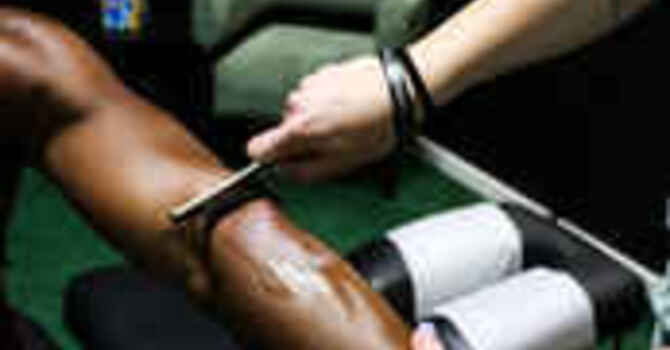
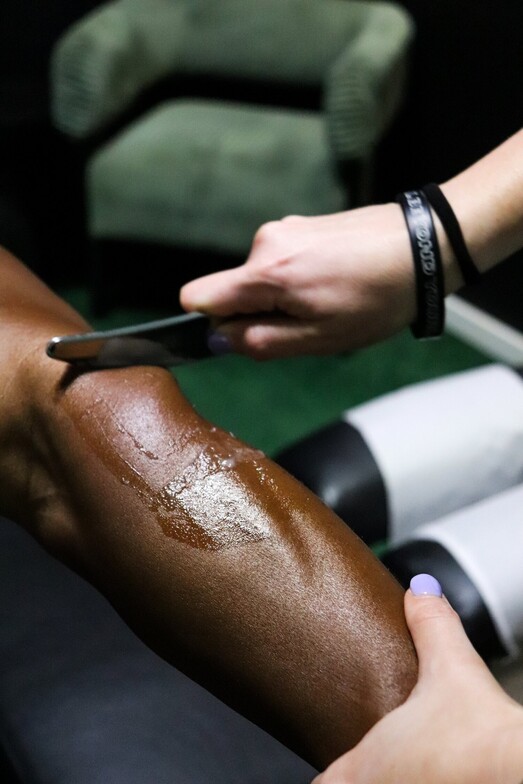
Graston Technique (a form of instrument-assisted soft tissue mobilization, or IASTM) uses specialized stainless steel instruments to detect and treat areas of restricted fascia and scar tissue. Instead of just pressing into the muscle with hands or a foam roller, the edge of the instrument allows me to feel exactly where the tissue is bound up — often areas that don't feel like anything unusual to the patient until we're right on top of them.
Once we find that restricted tissue, controlled scraping strokes are used to break up adhesions, increase local blood flow, and kickstart the body's natural healing response. It sounds intense, and there's usually some mild redness or bruising afterward, but most patients are surprised by how much range of motion and looseness they feel in the calf immediately after a single session.
For athletes dealing with chronic calf tightness, mild strains that keep flaring up, or that nagging feeling that your calf is "one hard sprint away" from pulling, this is one of the most effective tools I have in the clinic. It's also a common piece of the treatment plan for people recovering from a calf strain who want to return to running or their sport without re-injuring the area.
What to Expect From Treatment
A typical Graston session on the calf takes about 10 to 15 minutes as part of your visit. I'll assess the muscle first to map out where the restrictions actually are — it's rarely the whole calf, usually just one or two specific bands of tissue. From there, treatment is paired with movement: I'll often have you actively flex and point your foot while I work through the tissue, since motion during treatment helps the muscle fibers realign properly as they heal.
Most patients need a handful of sessions spaced over a few weeks, not a single visit, especially if the tightness has been building for months. We'll usually pair Graston with targeted strengthening and a return-to-running or return-to-sport plan so the calf doesn't just feel better temporarily — it actually gets more resilient.
When to Get It Checked Out
If you're dealing with calf tightness that keeps coming back, a strain that's healed "enough" but still doesn't feel 100%, or you've noticed your calf fatiguing or cramping earlier than it used to during runs or games, it's worth getting evaluated rather than waiting for it to become a bigger problem. Calf strains that aren't fully rehabbed have a frustrating habit of turning into repeat injuries.
At Limitless Sports Chiropractic, we work with runners and athletes throughout Little Elm and the greater North DFW area who want a real solution for soft tissue issues like this — not just another round of stretches that don't hold. As a sports chiropractor Oak Point TX athletes trust for hands-on soft tissue work, I combine Graston Technique with a broader treatment plan built around your specific training and goals, whether you're based in Oak Point, Little Elm, Prosper, Aubrey, or anywhere in North DFW.
If your calf has been holding you back, let's find out what's actually going on and get it resolved. Book an appointment at Limitless Sports Chiropractic and let's get you back to training pain-free.
Taylor Hartman
Contact Me