That Old Injury May Still Be Affecting You
You rolled your ankle two years ago. Your shoulder healed from that strain but still feels off. Your knee surgery went well but there is always a little tightness that was not there before. Old injuries have a way of sticking around even after the pain is gone, and scar tissue is usually why.
Scar tissue forms as part of your body's natural healing process. It fills in damaged areas fast, which is the point. But it is not the same as the original tissue. It is denser, less flexible, and not organized the way healthy muscle, tendon, or ligament fibers are. Over time, this creates areas of restriction that limit your movement, change how you load your joints, and often become the source of recurring pain and stiffness.
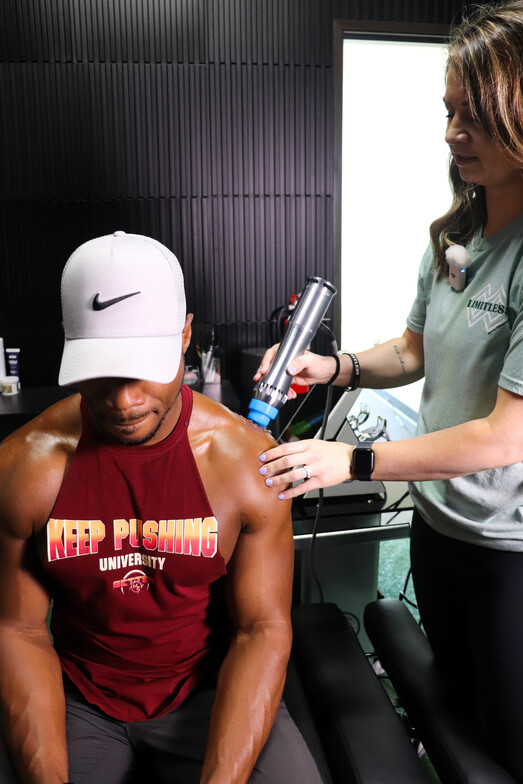
At Limitless Sports Chiropractic in Oak Point, TX, shockwave therapy is one of the tools we use specifically to address scar tissue. It is one of the few treatments that can actually change the tissue structure rather than just temporarily improving how it feels.
What Scar Tissue Does in the Body
After an injury, your body lays down collagen fibers quickly and in a disorganized pattern. Think of it like a patch job. The hole gets filled, but the patch is stiffer and less functional than what was there before. In tendons, ligaments, and muscle, this means less ability to stretch, absorb force, and move through a full range of motion.
When scar tissue forms in layers, it can also create adhesions, areas where tissue that should slide freely over each other gets stuck together. This is common after surgeries, sprains, and muscle tears. Adhesions restrict movement, alter your movement patterns, and put extra stress on nearby structures that were not part of the original injury.
Left alone, scar tissue does not just go away. Foam rolling and massage can improve how it feels temporarily, but they do not remodel the tissue at a deeper level.
How Shockwave Remodels Scar Tissue
Shockwave therapy delivers acoustic pressure waves into the target tissue. When those waves hit areas of dense scar tissue and adhesions, a few important things happen.
The mechanical energy physically disrupts the disorganized collagen fibers and adhesions that make up scar tissue. At the same time, the waves signal your body to respond with a fresh healing reaction in that area, including increased blood flow, new collagen production, and cellular activity that helps reorganize the tissue into a more functional structure.
This process is called tissue remodeling. Instead of just managing the symptoms that come from scar tissue, shockwave therapy actually changes the quality of the tissue over time. Athletes often notice improved range of motion, less stiffness in previously injured areas, and better performance in the movements that used to feel restricted.
When We Use Shockwave for Scar Tissue at Limitless Sports Chiropractic
We use shockwave for scar tissue in several situations. Post-surgical adhesions after knee, shoulder, or ankle surgeries are a common one. Old muscle tears that healed but left behind a dense spot are another. Chronic tendon problems where years of micro-damage have built up. Anywhere that tissue has been injured, repaired improperly, and is now limiting what you can do.
Runners in Aubrey and Little Elm with IT band issues, athletes with old hamstring or quad tears, and people who feel like an area just never came back to 100 percent after an injury are all good candidates. We will assess the area and tell you whether shockwave makes sense for your specific situation.
Take the Next Step
If there is a spot in your body that has never felt quite right since an old injury, it is worth getting looked at. Scar tissue does not have to be a permanent limitation. Book a visit at limitlesssportschiropractic.com and let us find out what is actually going on.
FAQ: Shockwave and Scar Tissue
Q: How long does scar tissue take to remodel with shockwave?
A: Changes happen over weeks, not days. Most conditions start responding within 3 to 6 treatments. Full tissue remodeling typically takes 10 to 12 sessions, and the process continues for 6 to 8 weeks after your last treatment as the tissue finishes reorganizing.
Q: Can shockwave help with scar tissue from surgery?
A: Yes, post-surgical adhesions are one of the most common reasons we use shockwave. We typically wait until the surgical site is well healed before starting, usually at least 3 months post-op. We will review your surgical history before starting treatment.
Q: Is shockwave painful over scar tissue?
A: Areas with dense scar tissue can be more sensitive during treatment. We adjust the intensity based on what you can handle and your comfort level throughout the session.
Q: How is this different from Graston or IASTM?
A: Graston uses metal instruments on the surface of the skin to break up adhesions. Shockwave sends energy deeper into the tissue without breaking the skin. Both have a role, and we often use them together for the best results.
Q: What if my scar tissue is from something that happened years ago?
A: Shockwave can still help. The tissue is still responsive to the treatment even in long-standing cases. Older scar tissue typically needs the full 10 to 12 session package, sometimes more, but we have seen good results in people with injuries that happened years ago.

Taylor Hartman
Contact Me