If you've been dealing with a deep ache in your glute that shoots down the back of your leg, there's a good chance someone has already told you it's sciatica. Sometimes that's exactly right. But in a lot of the athletes and active adults I see at Limitless Sports Chiropractic, the real source of that pain isn't a compressed nerve root in the low back at all — it's a tight, overworked piriformis muscle deep in the hip pinching the sciatic nerve as it passes underneath (or in some people, through) it. This is called piriformis syndrome, and it's one of the most commonly misdiagnosed sources of "sciatica" pain I see in runners, cyclists, and weekend athletes across Oak Point and Little Elm.
How to Tell the Difference
True sciatica from a lumbar disc issue usually comes with low back pain, and symptoms often worsen with sitting, bending, or coughing. Piriformis syndrome, on the other hand, tends to show up as a deep, localized ache right in the center of the glute — often described as feeling like a golf ball is wedged under the muscle — that gets worse with prolonged sitting (think long drives or desk work), climbing stairs, or activities that involve hip rotation, like squatting, lunging, or pivoting on the field. Many patients also notice tightness that radiates partway down the back of the thigh but doesn't necessarily follow the nerve all the way to the foot the way true nerve root sciatica often does.
The piriformis is a small, deep hip rotator muscle that sits underneath your glutes, and it works hard: it stabilizes the hip during single-leg activities, controls rotation when you cut and change direction, and helps decelerate the leg during running. When it gets overused, tight, or develops restrictions from old scar tissue, it can shorten and start compressing the sciatic nerve running beneath it. Stretching alone often doesn't fix it, because a chronically shortened muscle with tissue restrictions needs more than a passive stretch — it needs the restriction itself addressed.
Why Active Release Technique Works Here
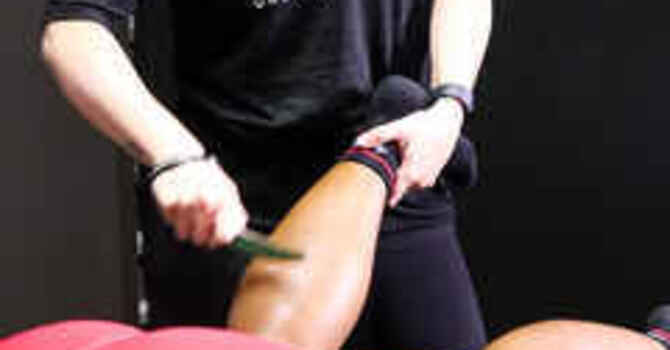
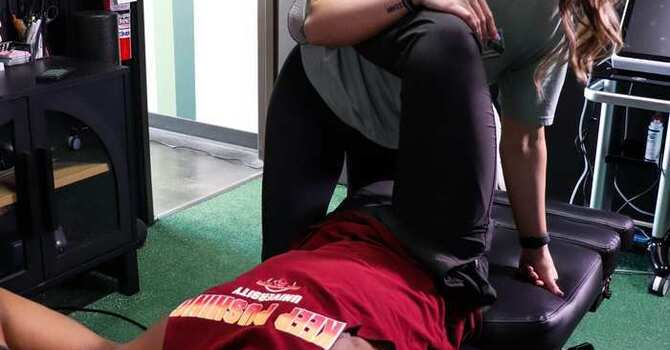
Active Release Technique (ART) is a hands-on soft tissue method where I apply precise tension to the piriformis and surrounding hip rotators while guiding your leg through a specific range of motion. That combination — tension plus movement — is what makes ART different from a massage or a static stretch. It lets me find the exact spot where the muscle and surrounding fascia have lost their normal glide, and break up the adhesions that are keeping the muscle short and irritated. Most patients feel looser after the very first session, though a stubborn case built up over months or years of training usually takes a handful of visits to fully resolve.
I'll also check the rest of the kinetic chain during your visit — hip and lumbar spine mobility, glute strength, and how your pelvis moves during a single-leg squat — because piriformis syndrome rarely shows up in isolation. It's frequently a compensation pattern for a stiff low back, weak glutes, or an SI joint that isn't moving the way it should. Treating the piriformis without addressing why it got overworked in the first place is a good way to end up right back where you started.
What You Can Do Right Now
If you're dealing with this kind of deep glute ache, avoid sitting for long stretches without breaks, and skip aggressive static stretching into deep hip flexion until we've had a chance to assess it — for some patients that actually aggravates an already irritated piriformis. A short walk every 30-45 minutes to keep the hip moving is a better bet in the meantime.
The bigger point here: not every ache that radiates from your glute down your leg is a disc problem, and it's worth getting an actual assessment rather than assuming the worst or resigning yourself to it being "just tight." Getting the right diagnosis is the difference between months of frustration and a few focused visits.
If you're in Oak Point, Little Elm, Prosper, or anywhere else in North DFW and dealing with glute or hip pain that won't quit, I'd like to take a look. As a sports chiropractor in Oak Point, TX, I see this exact presentation regularly in runners, lifters, and weekend athletes, and Active Release Technique is one of the most effective tools I have for resolving it. Book an appointment at Limitless Sports Chiropractic and let's figure out what's actually going on.

Taylor Hartman
Contact Me