You reach into the back seat, finish a heavy set of rows, or take a hard hit at practice, and suddenly a sharp pain grabs you right next to your spine. A deep breath makes it bite. Twisting to check your blind spot makes it worse. Lying on your back feels like someone left a golf ball under your shoulder blade.
We see this pattern often, and in many athletes the source is a rib joint that has lost its normal motion. Patients sometimes call it a "rib out." The rib has not actually popped out of place, but the joint where it meets the spine has stiffened and irritated the tissue around it.
How Your Ribs Move (and Why They Get Stuck)
Each of your 12 pairs of ribs connects to your thoracic spine at two small joints: the costovertebral joint, where the rib meets the body of the vertebra, and the costotransverse joint, where it meets the bony wing beside it. Every breath you take moves these joints. They glide and rotate thousands of times a day so your rib cage can expand and your trunk can twist.
When one of these joints stiffens, the muscles around it guard and tighten, and the stiff joint can irritate the nerve that runs along the underside of the rib. That combination explains why rib pain often feels so sharp and so specific. You can usually point to it with one finger.
Common triggers we see in our office include:
- Overhead and rotational sports like swimming, volleyball, baseball, softball, tennis, and golf
- Heavy pulling work in the gym, especially rows, pull-ups, and deadlifts with a rounded upper back
- Contact in football, soccer, or basketball
- A hard coughing or sneezing spell during cold and flu season
- An awkward sleeping position, or a sudden reach or twist
Signs Your Pain Might Be Coming From a Rib
- Sharp, localized pain beside the spine or along the inner edge of the shoulder blade
- Pain that spikes with a deep breath, cough, sneeze, or laugh
- Pain with twisting, side bending, or reaching overhead
- Pain that sometimes wraps toward the side or front of the chest along the rib
- Trouble finding a comfortable sleeping position
Chest pain always deserves a careful look. If your pain comes with shortness of breath, chest pressure, pain that spreads into your arm or jaw, a fever, or a hard fall or collision, check in with your medical provider first. Our exam also screens for anything that needs a different kind of care before we treat.
Why Rest and Stretching Don't Always Settle It
Rest can calm the muscle guarding for a few days, but rest does not restore motion to a stiff joint. Many athletes tell us the pain fades, then returns the first time they get back under a barbell or swing a club. Stretching can feel good, but a general stretch moves the joints that already move well and tends to skip the one stuck segment.
Foam rolling the upper back sometimes helps, and sometimes aggravates a sore joint. If rolling makes the sharp spot worse, treat that as useful information, not something to push through.
How Chiropractic Adjustments Help Rib Pain
Our goal is to find the specific rib and thoracic segment that stopped moving well and restore that motion. A typical visit includes:
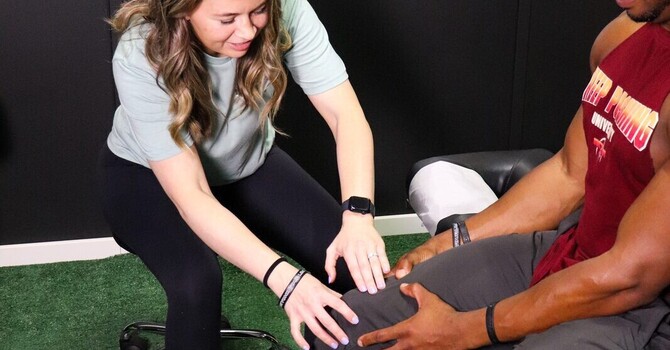
- A focused exam. We check breathing mechanics, trunk rotation, shoulder motion, and how each rib and thoracic segment moves under our hands.
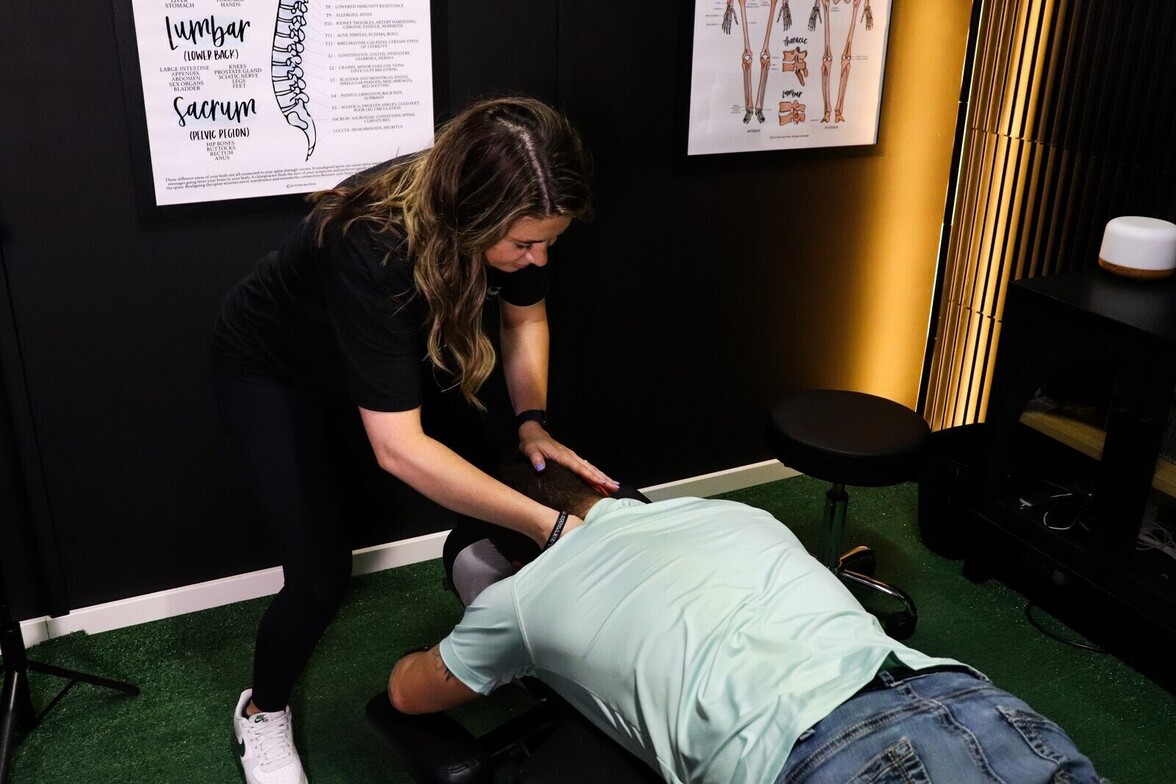
- Specific adjustments. We use targeted adjustments for the restricted rib joint and the thoracic vertebrae around it. Many patients notice they can take a fuller breath shortly after.
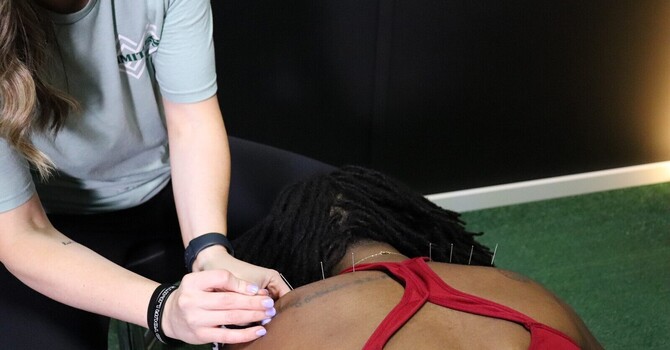
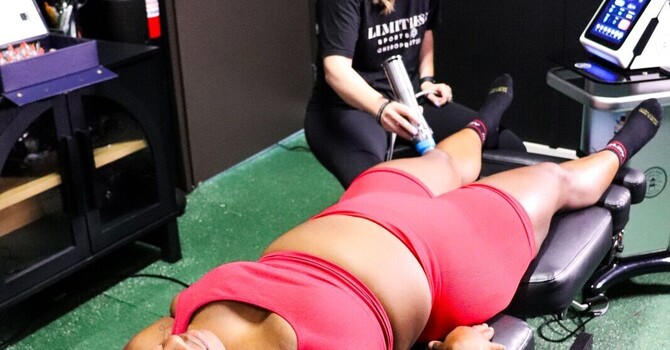
- Soft tissue work. We often add myofascial release or instrument-assisted work to the muscles between the ribs, the rhomboids, and the muscles along the spine, since those tissues guard hard around a stiff joint.
- A plan to keep it moving. We give you simple breathing drills and thoracic mobility work so the joint keeps its motion between visits.
Getting Back to Training
Rib joint restrictions often respond well to care, though your timeline depends on how long the problem has been around and what set it off. We look at the whole chain, too. Stiff thoracic mobility, a weak upper back, or a swim stroke or swing that leans hard on one side can keep reloading the same rib, so we address those pieces as part of your plan.
In many cases you can keep training in some form while we work on it. We help you adjust your lifts, swim volume, or practice load so you stay active without aggravating the joint.
Rib Pain Care for Little Elm, Oak Point, and North DFW Athletes
If you live in Little Elm or Oak Point and a sharp spot beside your spine catches every time you breathe deep or twist, our team at Limitless Sports Chiropractic can help you find the source. We work with athletes and active adults from Little Elm, Oak Point, Aubrey, Cross Roads, Denton, and Prosper who want to get back to training with confidence.
Ready to take a full breath again? Book your visit with Dr. Taylor Hartman online and let's find out what's going on with that rib.

Taylor Hartman
Contact Me