If you run, play soccer, or train for any sport that pounds the pavement, you probably know the feeling: a dull, aching line of pain along the inside of your shin that shows up a few minutes into a run, fades as you warm up, and then comes roaring back that night. That's shin splints, and for a lot of athletes in Aubrey and the surrounding North DFW area, it becomes a months-long frustration that rest alone never quite fixes.
I'm Dr. Hartman, and I see this constantly at Limitless Sports Chiropractic. Here's what's actually going on in your lower leg, and why shockwave therapy has become one of my go-to tools for it.
What Shin Splints Really Are
"Shin splints" is the common name for medial tibial stress syndrome. The muscles along the inside of your shin, mainly the tibialis posterior and the soleus, attach to a thin layer of tissue wrapped around the tibia called the periosteum. When those muscles are overloaded by a jump in mileage, a new surface, worn-out shoes, or tight calves and weak hips, they tug repeatedly on that attachment. The result is irritation and inflammation where muscle meets bone, and that's the sore, tender stripe you can press on with your thumb.
The problem is that this area has relatively poor blood supply. Once the tissue is irritated, it heals slowly, and every training session re-aggravates it. That's why so many people get stuck in a cycle of rest, feel better, return to running, and flare up again within two weeks.
Why Rest and Stretching Often Aren't Enough
Rest calms symptoms, but it doesn't rebuild the irritated attachment or break up the stiff, thickened tissue that has formed along the shin. Stretching the calf helps, but it can't reach the deeper tissue where the real problem sits. Ice and anti-inflammatories may take the edge off, but they don't stimulate repair. If you've been doing all three and your shins still ache, the tissue probably needs a stronger signal to start healing.
How Shockwave Therapy Helps
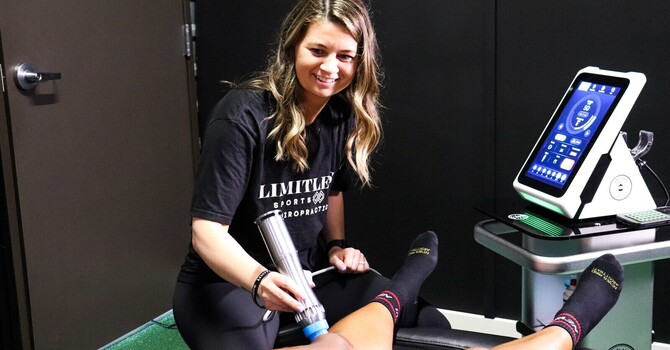
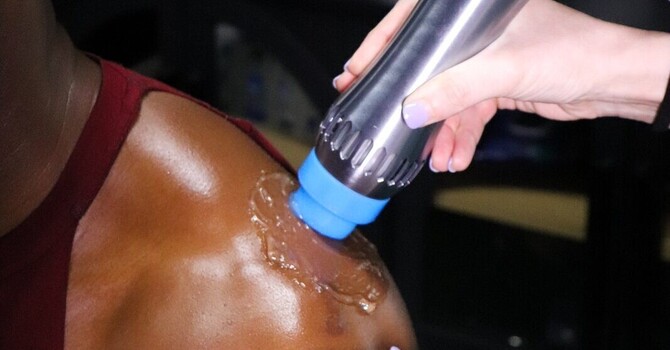
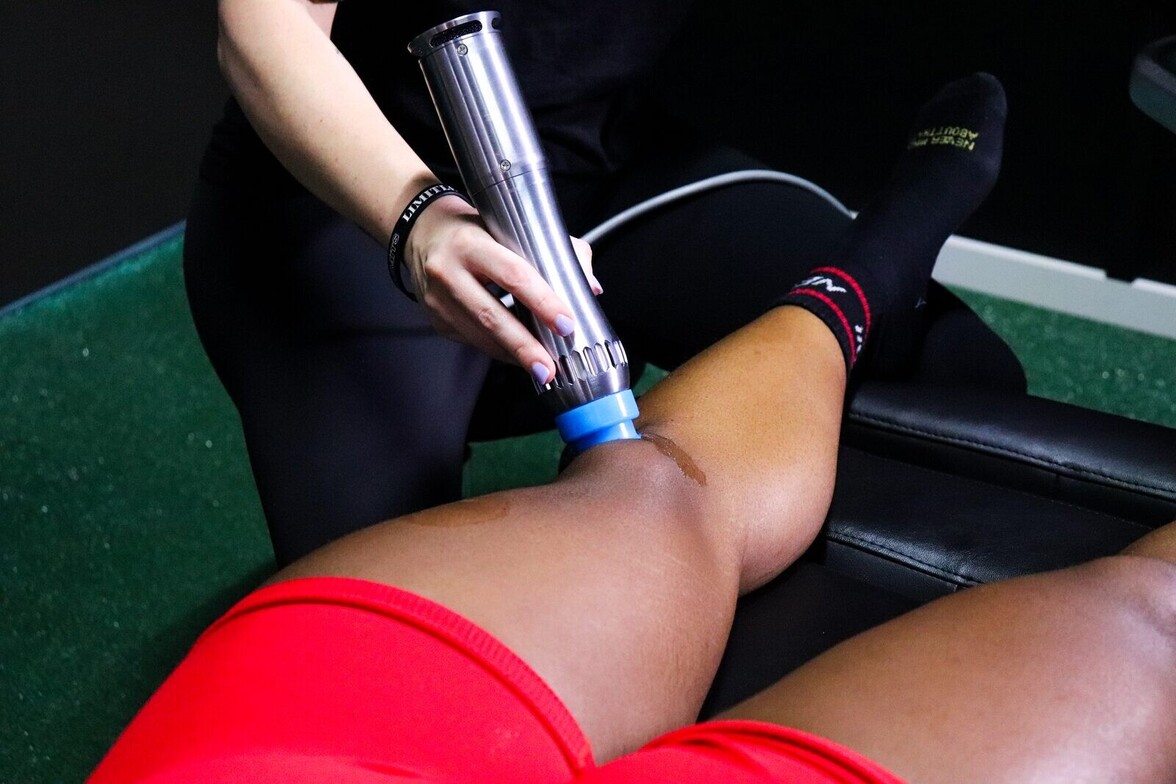
Shockwave therapy uses acoustic pressure waves delivered through a handheld applicator to the painful area. Those waves do a few useful things at once:
- Increase blood flow to a region that normally gets very little, which brings in the nutrients and cells needed for repair.
- Stimulate tissue remodeling so irritated, overworked tissue along the shin can rebuild itself more effectively.
- Calm pain signaling in the area, which many patients notice as less tenderness when they press along the shin.
- Loosen tight, stiff tissue in the tibialis posterior and calf complex that keeps pulling on the shin.
A session is short, usually just a few minutes over the sore area. It's a firm, tapping sensation that can feel intense over tender spots, but it's controlled, and we adjust the intensity to what you can tolerate. Most people can walk out and go about their day.
What a Visit Looks Like
I never treat shin pain in isolation. At your first visit I'll look at how you stand, how your foot and ankle move, how your hips are working, and how you load your legs when you run or jump. Shin splints are often a symptom of something further up or down the chain, like a stiff ankle, weak glutes, or a foot that collapses inward. Shockwave works on the painful tissue itself, and we pair it with hands-on soft tissue work such as myofascial release for the calf, plus targeted adjustments and simple strengthening and running-form changes so the problem doesn't come back.
It's also important to rule out a tibial stress fracture, which can mimic shin splints. If your pain is sharp, focused on one small spot, or hurts at rest and at night, we'll talk through whether imaging makes sense before treating.
Tips to Protect Your Shins While You Heal
Cut back your running volume rather than stopping everything; cycling or swimming can keep your fitness up. Replace running shoes that have more than 300 to 500 miles on them. Increase mileage gradually, no more than about 10 percent a week. Strengthen your calves, tibialis anterior, and hips, and try to run on softer surfaces when you can.
Shin Splint Treatment for Athletes in Aubrey, Oak Point, and Beyond
Whether you're a high school cross-country runner, a weekend half-marathoner, or a coach who's on your feet all day, you don't have to accept shin pain as the price of staying active. As a chiropractor in Aubrey, TX, I treat athletes and active adults from Aubrey, Oak Point, Little Elm, Crossroads, Denton, and Prosper, and shockwave is a big part of how we get people back to training with confidence.
If shin pain is keeping you from running, book an appointment with Limitless Sports Chiropractic and let's get to the root of it. You can also give the clinic a call to ask whether shockwave therapy is right for your situation.

Taylor Hartman
Contact Me