Most People Have Questions Before Their First cupping Session
You have probably seen the circular marks on athletes and wondered what they are all about. Maybe a friend recommended cupping, or you read that it helps with recovery and muscle tightness. Either way, if you have never had cupping done before, it is normal to want to know what you are walking into.
Here at Limitless Sports Chiropractic in Oak Point, TX, we work with athletes and active adults from Aubrey, Little Elm, Prosper, and the surrounding area. Cupping is not a standalone service at Limitless Sports Chiropractic. It is included in follow-up visits alongside chiropractic and soft tissue work. This is a breakdown of what that looks like in practice.
Before You Come In
There is not much you need to do to prepare for cupping. A few things that make the session go better: drink water before you come in, avoid eating a heavy meal right beforehand, and wear or bring clothing that allows easy access to the area we will be treating. If it is your upper back or shoulders, a tank top works great. If it is your legs or calves, shorts are helpful.
When you arrive, we will ask about what is going on, what sport or activity you do, where you are feeling tight or sore, and whether you have any skin conditions or sensitivities in the treatment area. This takes just a few minutes and helps us put the cups in the right spots.
During the Session: What It Feels Like
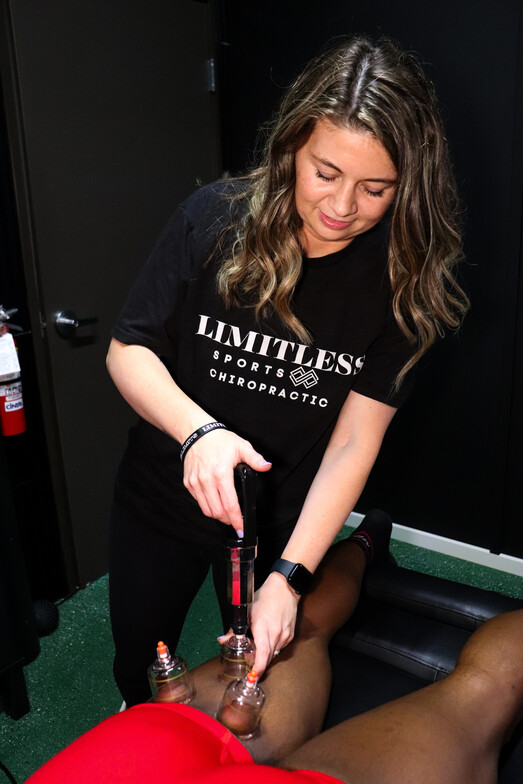
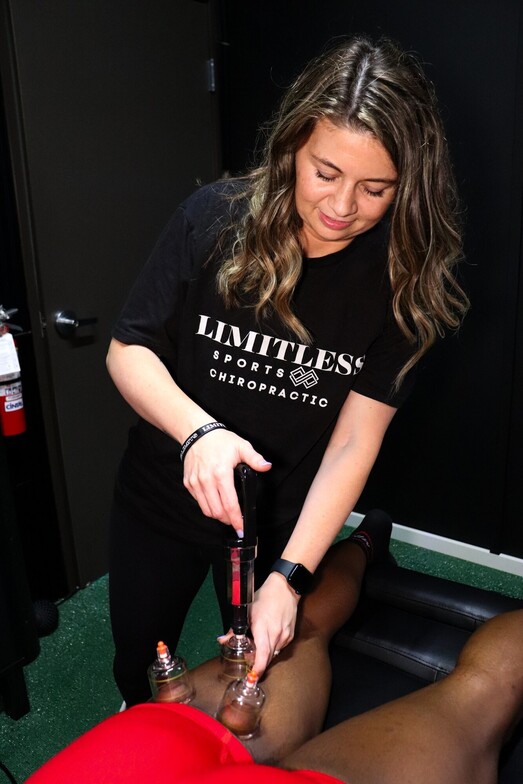
We place cups on the skin using suction. Most people describe the feeling as a firm pulling or tight pressure. It is different from massage, which pushes in. Cupping pulls up. For most people it is not painful, though some areas that are especially tight might feel more intense than others.
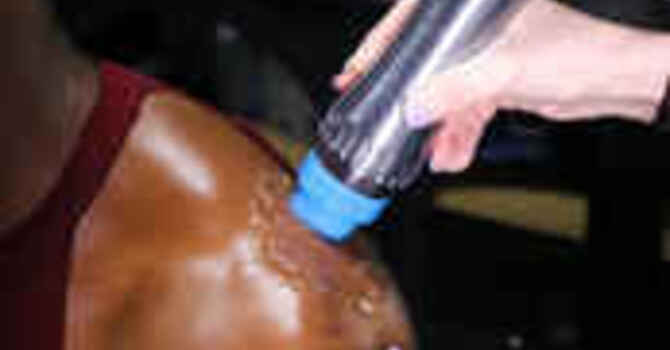
There are two main techniques. With stationary cupping, the cups sit in one spot for a few minutes. With sliding cupping, we apply oil to the skin first and move the cups around to cover more ground. Sliding cupping is more intense than stationary cupping but can result in deeper relief.
Because we add motion to cupping — having you move through ranges of motion while the cups are applied — sessions typically run 5 to 10 minutes. Motion cupping is more efficient than stationary cupping and gets better results in less time. Cupping is integrated into your follow-up visit alongside chiropractic and soft tissue work.
The Marks: What They Are and How Long They Last
The circles left behind by cupping are one of the most common things people ask about. They look like bruises but they are not. A bruise happens when tissue is crushed and bleeds. Cupping marks happen when blood is drawn to the surface of the skin by suction. The tissue underneath is not damaged.
The marks are usually painless. They can range in color from light pink to dark purple depending on how much tension and stagnation was in that area. They fade on their own in 3 to 7 days. There is nothing you need to do to treat them.
If you have something coming up and you do not want the marks to show, just let us know and we can time your session accordingly or focus on areas that will be covered.
After Your Session
Most people feel looser and lighter right away. Some people feel a little tired or tender in the treated areas for a day or so. This is normal. Drink plenty of water after your session. Avoid ice on the treated areas and skip the steam room or hot tub that day. Light movement is fine. Heavy training should wait until the next day.
Results build over time. Your first session may feel good but the bigger changes typically come after a few sessions as the tissue keeps improving.
Ready to Book?
If you are in Aubrey, Oak Point, Little Elm, or Prosper and you are ready to get started, cupping is included in your follow-up visits. Limitless Sports Chiropractic is built for athletes and active adults who want real results, not just temporary relief.
Book at limitlesssportschiropractic.com or reach out to schedule your first session.
FAQ: First Cupping Session
Q: How long does a cupping session take?
A: Cupping itself typically takes 5 to 10 minutes. Because we add motion during the session, it works faster than traditional stationary cupping. The total appointment length depends on what else we are combining it with during your follow-up visit.
Q: Will the marks show at work or in public?
A: The marks are usually in areas that clothing covers. If you are concerned, just tell us during your appointment and we can plan around it.
Q: I have sensitive skin. Can I still get cupping?
A: Possibly, but we will check before we start. Some skin conditions are not a good fit for cupping. Let us know about any history of skin sensitivity, eczema, or other conditions during your intake.
Q: What if I do not like the sensation?
A: We adjust the suction level based on your feedback. There is no reason to push through something that feels wrong. Cupping should be intense but tolerable.
Q: How many sessions will I need?
A: It depends on what you are trying to accomplish. Since cupping is included in your follow-up visits, you are already getting it as part of your care. For general recovery and maintenance, many athletes come in every one to two weeks. For a specific injury or chronic tightness, we usually recommend starting with a few visits close together and then spacing them out as things improve.

Taylor Hartman
Contact Me